
Dr. Katy Chou Earns New Implant Dentistry Credential: What This Means for Our Patients
When it comes to your smile, choosing the right dental care matters. Whether you’re replacing a missing tooth, improving your smile’s appearance, or exploring ways to protect your oral health, you want a dental team that values knowledge, experience, and continued learning.
That’s why we’re excited to highlight a new professional milestone for Dr. Katy Chou of Prestige Dental Spa in Lake Elsinore: earning an additional credential in implant dentistry.
This achievement reflects a commitment to expanding dental knowledge and staying engaged with developments in modern dentistry. For patients considering dental implants, it’s also an opportunity to learn more about the treatment, understand their options, and ask informed questions about restoring missing teeth.
But what exactly is implant dentistry? How can dental implants help patients? And why does continuing education matter when choosing a dentist?
Let’s take a closer look.
What Is Implant Dentistry, and Why Is It Important?
Implant dentistry focuses on replacing missing teeth with dental implants. Unlike traditional bridges or removable dentures, dental implants are designed to replace the root of a missing tooth as well as support its visible replacement.
A dental implant restoration generally has three components:
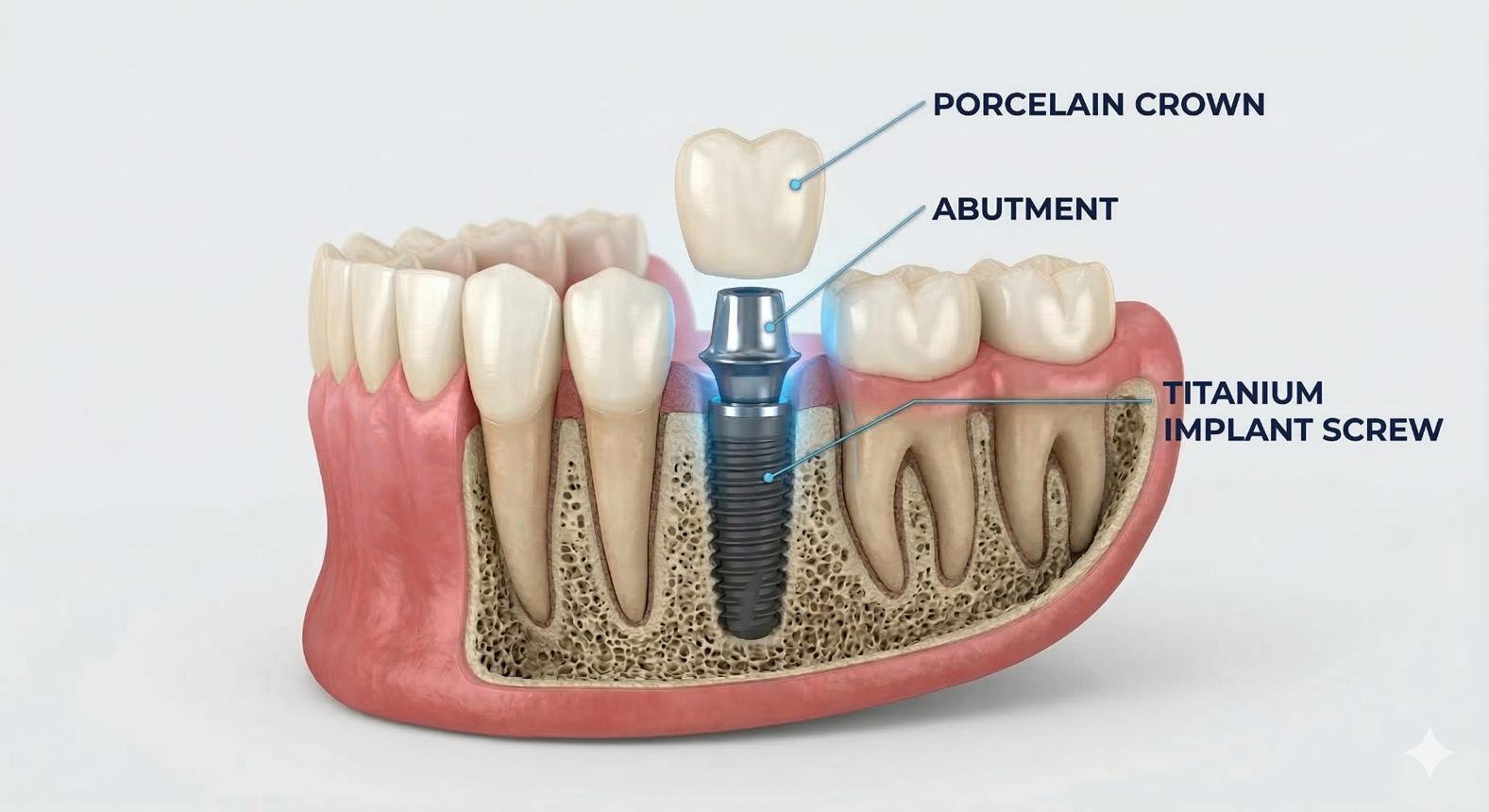
- Implant post: A small fixture, commonly made of titanium, placed in the jawbone to act as an artificial tooth root.
- Abutment: A connector that attaches the implant post to the replacement tooth.
- Dental crown: A custom-made restoration that looks and functions like a natural tooth.
Together, these components can restore the appearance and function of a missing tooth.
Dental implants may be used to replace one missing tooth, several missing teeth, or even support a full-arch restoration. The right approach depends on the patient’s oral health, jawbone condition, and treatment goals.
What Does Dr. Katy Chou’s New Implant Dentistry Credential Represent?
Earning an additional credential in implant dentistry represents an important professional milestone for Dr. Katy Chou.
Professional education doesn’t stop when a dentist completes dental school. Dentistry continues to evolve, with new research, materials, technologies, and treatment approaches becoming available over time.
Additional training can help dentists expand their knowledge in areas such as:
- Evaluating patients for dental implant treatment.
- Understanding jawbone anatomy and implant placement principles.
- Planning implant restorations.
- Recognizing factors that may affect healing.
- Understanding how implants work with surrounding teeth and gum tissues.
- Discussing treatment options and expectations with patients.
The exact skills and clinical requirements depend on the credentialing program. The important point for patients is that continued education reflects a commitment to staying engaged with developments in the profession.
And let’s be honest: most people don’t want their dentist learning everything they know about dentistry from a book they read 20 years ago. Medicine and dentistry move forward, and continuing education helps professionals keep learning.
Why Continuing Education Matters in Modern Dentistry
Dental treatment is rarely one-size-fits-all. Two patients can have the same missing tooth but require very different treatment plans.
One patient may have sufficient jawbone and healthy gums, while another may need periodontal treatment or bone grafting before an implant can be considered.
Ongoing education helps dentists build on their existing knowledge and stay informed about developments that may influence diagnosis, treatment planning, and patient care.
For patients, this reinforces an important part of choosing a dental provider: finding someone who values both clinical knowledge and clear communication.
How Could This Achievement Benefit Our Patients?
A dentist’s professional development matters most when it helps patients better understand their options and make informed decisions.
For someone considering dental implants, treatment involves more than simply placing a post in the jawbone. The dentist must evaluate several factors, including gum health, bone support, bite alignment, medical history, and the condition of neighboring teeth.
Continued education in implant dentistry can support a more informed approach to these considerations.
Patients may benefit from:
- More informed treatment discussions: Understanding the steps involved and what to expect.
- Thoughtful treatment planning: Evaluating oral health and identifying potential challenges.
- A better understanding of available options: Comparing implants, bridges, and dentures.
- Clearer expectations: Discussing healing, maintenance, and possible complications.
- Patient-centered recommendations: Considering individual needs rather than recommending the same treatment for everyone.
A credential does not guarantee a particular outcome or mean that every patient is a candidate for implants. It is one part of a dentist’s broader professional education and experience.
Why Are Dental Implants a Popular Option for Missing Teeth?
Losing a tooth can affect more than the appearance of your smile. It may change the way you chew, speak, and feel about your teeth.
According to the National Institute of Dental and Craniofacial Research, U.S. adults between ages 20 and 64 had an average of 25.5 remaining natural teeth in the 2017–March 2020 survey period, compared with the full set of 32 permanent teeth. NIDCR
Dental implants offer one option for replacing missing teeth because they provide support from within the jawbone.
Potential Benefits of Dental Implants
1. A natural-looking smile
A custom dental crown is designed to blend with surrounding teeth, helping restore the appearance of your smile.
2. Improved chewing function
Because implants are anchored in the jawbone, they can provide stable support for replacement teeth.
3. Support for jawbone stimulation
Natural tooth roots transmit chewing forces to the jawbone. When a tooth is lost, that stimulation decreases in the affected area. An implant can help restore some of that stimulation.
4. No need to rely on neighboring teeth for a single-tooth replacement
Unlike a traditional dental bridge, a single-tooth implant does not require the adjacent teeth to support the replacement tooth.
5. Long-term potential
Research published in 2019 found an estimated 10-year implant survival rate of 96.4% in its traditional analysis of 18 studies. A more conservative sensitivity analysis estimated 93.2%. These are study-level estimates, not guarantees for individual patients. PubMed
What Does the Dental Implant Process Look Like?
Patients often want to know what happens between their first consultation and receiving their replacement tooth.
Although every treatment plan is different, dental implant treatment generally involves several stages.
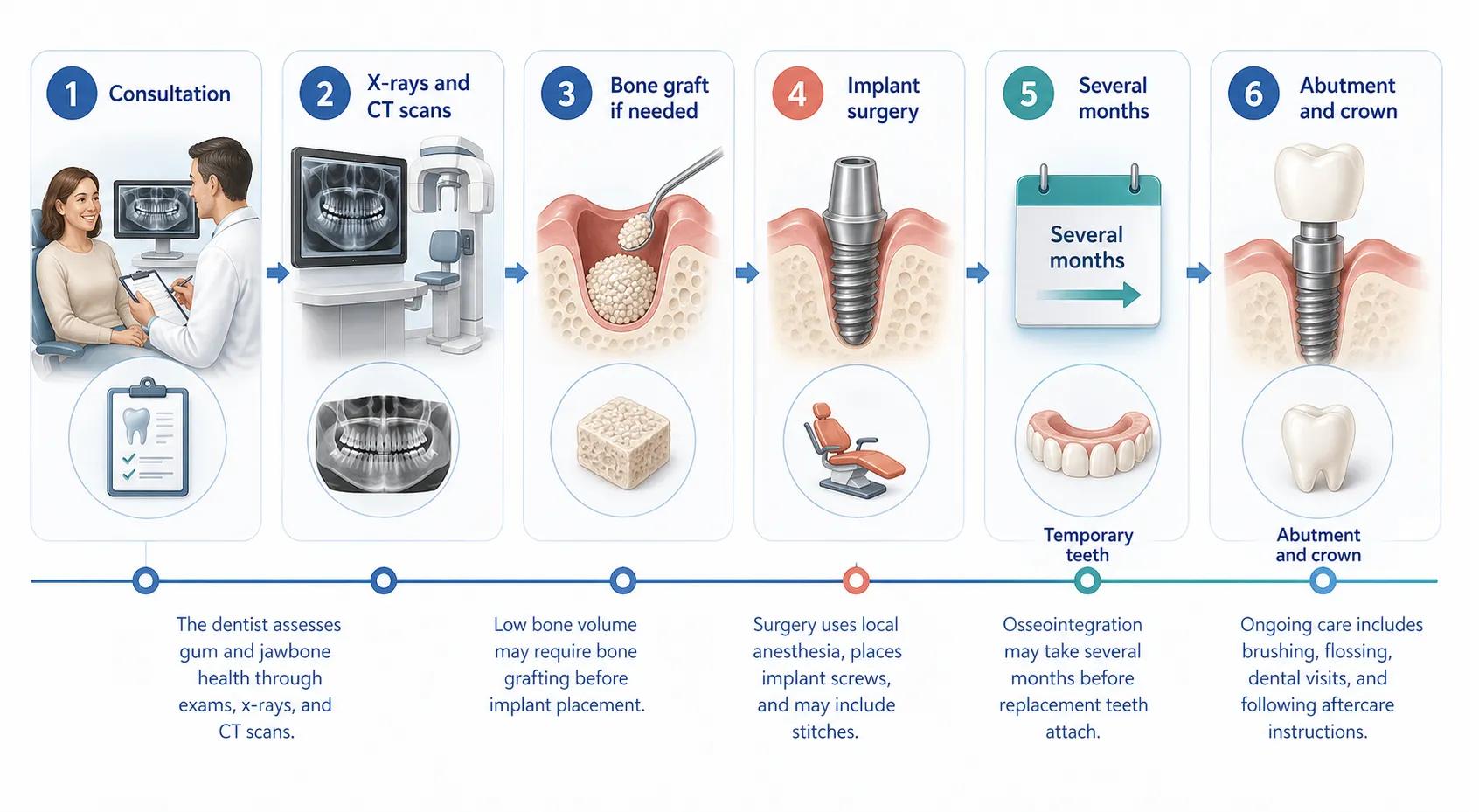
Step 1: Initial Consultation
The dentist evaluates your teeth, gums, jawbone, and overall oral health. Dental X-rays or 3D imaging may be recommended to assess the treatment area.
Step 2: Preparing the Treatment Area
If you have untreated gum disease, infection, or insufficient bone support, these issues may need to be addressed before implant placement.
Some patients may need bone grafting to help create adequate support.
Step 3: Implant Placement
The implant post is positioned in the jawbone using an appropriate surgical technique. Local anesthesia is generally used to numb the area.
Step 4: Healing and Osseointegration
The implant needs time to bond with the surrounding bone. This process, called osseointegration, helps create the stable foundation needed to support the replacement tooth.
Step 5: Attaching the Dental Crown
Once the implant has healed and is stable, an abutment and custom dental crown can be attached according to the treatment plan.
The entire process may take several months. Healing time varies depending on the patient’s condition and whether additional procedures are necessary.
Why Healthy Gums Matter Before Getting Dental Implants
Dental implants depend on more than healthy bone. The surrounding gum tissue also plays an important role in maintaining the health of the restoration.
This is especially important for patients with a history of Periodontal Disease.
Periodontal Disease is an infection and inflammatory condition affecting the tissues that support the teeth. In advanced stages, it can damage the jawbone and contribute to tooth loss.
In fact, the National Institute of Dental and Craniofacial Research reports that approximately 42.2% of U.S. adults aged 30 and older had some level of periodontitis in the data it reports. NIDCR
Before recommending dental implants, a dentist should evaluate the patient’s gum health and determine whether periodontal treatment is needed.
Can You Get Dental Implants If You Have Periodontal Disease?
Having a history of Periodontal Disease does not automatically mean you cannot receive dental implants.
However, active gum disease should generally be treated and controlled before implant placement.
Your dentist may recommend:
- Professional periodontal treatment.
- Improved daily brushing and flossing.
- More frequent periodontal maintenance visits.
- Evaluation of bone support.
- Ongoing monitoring of gum health.
Even after implant placement, regular dental visits remain important. Implants can develop inflammation around the surrounding tissues, a condition known as peri-implantitis.
Healthy gums help support a healthy smile, whether your teeth are natural or restored.
The Role of Dental Crowns in Implant Dentistry
A dental implant provides the foundation, but the crown is what completes the visible tooth.
Dental crowns are custom restorations designed to cover or replace the visible portion of a tooth. In implant dentistry, the crown attaches to the implant through an abutment.
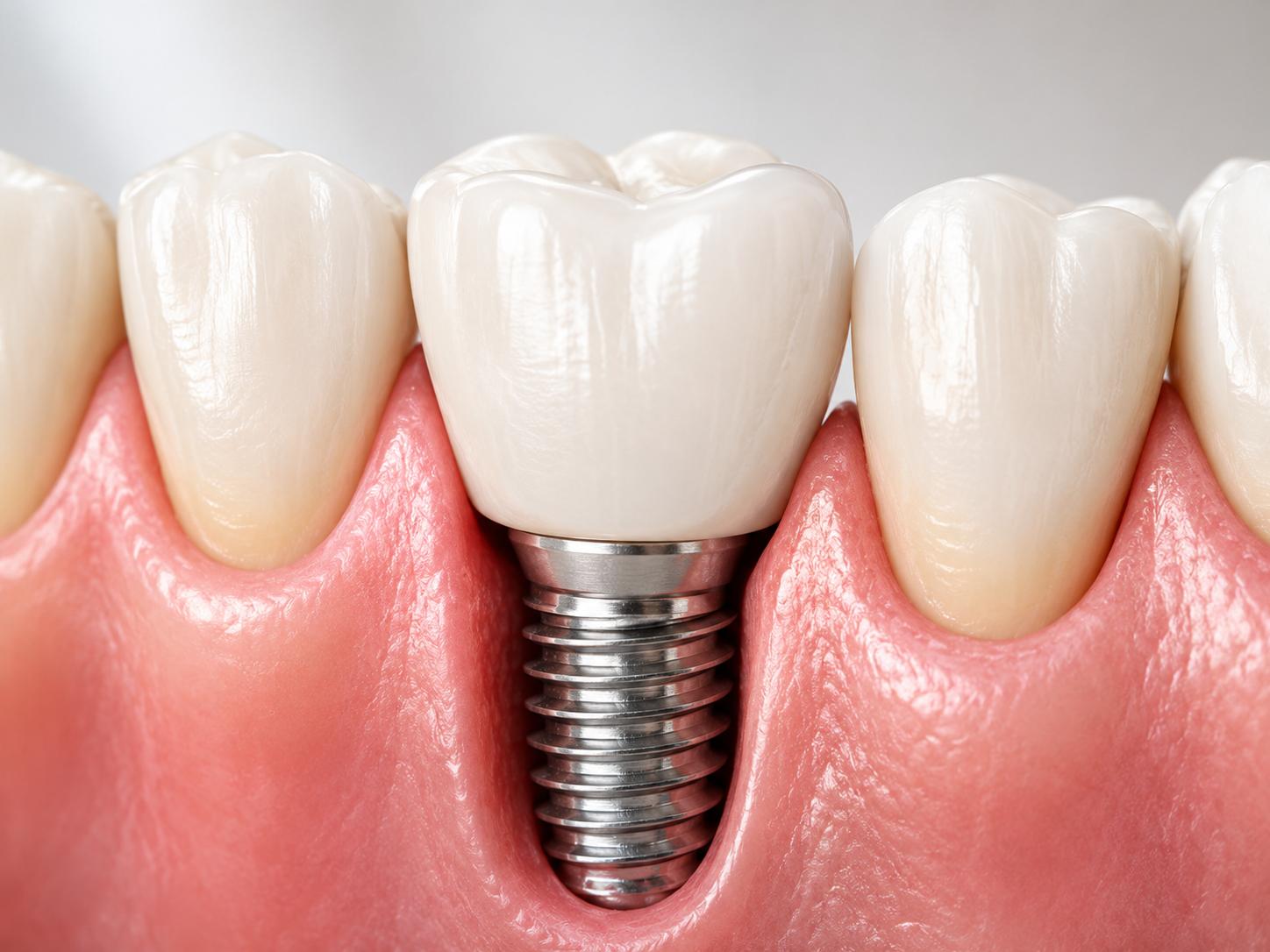
A well-planned crown should consider:
- The size and shape of surrounding teeth.
- The patient’s natural bite.
- The color of neighboring teeth.
- The location of the missing tooth.
- The patient’s functional and cosmetic goals.
Dental crowns can also be used to restore natural teeth that have been weakened by decay, fractures, or previous dental treatment.
For patients considering dental implants, understanding the role of crowns helps explain why implant treatment involves both the artificial root and the visible restoration.
Can Dental Implants Be Part of a Complete Smile Makeover?
Absolutely. Replacing missing teeth may be one part of a broader plan to improve the appearance and function of your smile.
Patients sometimes have several concerns at once. They may want to replace a missing tooth, repair damaged teeth, or brighten their smile.
Depending on their needs, a treatment plan may include:
- Dental implants to replace missing teeth.
- Dental crowns to restore damaged or weakened teeth.
- Teeth whitening to brighten natural teeth.
- Cosmetic dentistry to improve the overall appearance of the smile.
One important detail: professional teeth whitening does not change the color of existing dental crowns or implant crowns. If you are considering both treatments, discuss the order of care with your dentist so the final restorations can complement your desired tooth shade.
If you’re searching for a cosmetic dentist in Lake Elsinore, a consultation with Dr. Katy Chou at Prestige Dental Spa can help you explore which treatments may be appropriate for your smile.
Two Patient Experiences: Why Personalized Implant Planning Matters
Every patient’s dental needs are different. The following are illustrative examples, not actual patient testimonials from Prestige Dental Spa.
Example 1: Replacing a Missing Front Tooth
Imagine someone who loses a front tooth in an accident.
The missing tooth affects more than chewing. It becomes difficult to smile naturally, and the patient starts avoiding photographs.
After an examination, the dentist determines whether an implant may be an appropriate replacement option. The treatment plan considers the condition of the surrounding gums, available bone, and appearance of the neighboring teeth.
After the implant heals, a custom crown is attached to complete the restoration.
The goal is to replace the missing tooth with a restoration that looks natural and functions comfortably.
Example 2: Addressing a Missing Back Tooth
Another patient has been missing a molar for several years.
Because the gap isn’t visible when smiling, the patient initially decides not to replace it. Eventually, chewing becomes uncomfortable, and the patient begins favoring the other side of the mouth.
During an examination, the dentist evaluates the area and discusses possible replacement options, including an implant, bridge, or partial denture.
The patient learns that the best treatment depends on bone support, neighboring teeth, oral health, and personal preferences.
The lesson? Even a tooth you can’t see in the mirror can play an important role in your daily life.
Why Choose Prestige Dental Spa for Your Dental Care in Lake Elsinore?
Choosing a dentist is about more than finding someone who can perform a particular procedure. You want a dental team that listens to your concerns, explains your options, and considers your long-term oral health.
At Prestige Dental Spa in Lake Elsinore, Dr. Katy Chou is committed to continued professional development and personalized patient care.
Her additional education in implant dentistry represents another step in expanding her knowledge of treatment options for patients with missing teeth.
Whether you’re considering dental implants, need dental crowns, or want to improve your smile through teeth whitening, understanding your options is an important first step.
Patients looking for a cosmetic dentist in Lake Elsinore can schedule a consultation to discuss their goals and learn more about available treatments.
Frequently Asked Questions About Implant Dentistry
Implant dentistry is an area of dental treatment focused on replacing missing teeth using dental implants. An implant is placed in the jawbone and can support a dental crown, bridge, or denture.
No. Candidates need an evaluation of their gum health, jawbone support, medical history, and ability to heal. Some patients may need additional treatment before implants can be considered.
Treatment often takes several months because the implant needs time to bond with the jawbone. The timeline varies depending on healing and whether additional procedures, such as bone grafting, are needed.
Yes. Multiple implants can support individual crowns, implant-supported bridges, or implant-supported dentures, depending on the patient’s needs.
Some patients with a history of gum disease may qualify. However, active Periodontal Disease should generally be treated and controlled before implant placement.
A dental implant replaces the missing tooth root by being placed in the jawbone. A dental crown is the visible restoration that attaches to the implant and looks like a natural tooth.
Dental implants need daily brushing and cleaning between teeth, along with regular professional dental examinations. Your dentist may recommend specific cleaning tools depending on your restoration.
Continuing Education, Personalized Care, and Healthier Smiles
Dr. Katy Chou’s new implant dentistry credential represents an important professional milestone and reflects her continued commitment to learning and developing her dental knowledge.
For patients dealing with missing teeth, understanding available treatment options can make the decision-making process less overwhelming. Dental implants may offer a stable, natural-looking replacement, but the right approach always begins with an individual evaluation.
At Prestige Dental Spa, we believe patients deserve clear information, thoughtful recommendations, and care that considers their unique needs.
Considering dental implants or looking for ways to improve your smile? Schedule a consultation with Dr. Katy Chou at Prestige Dental Spa in Lake Elsinore to discuss your goals and explore your options.